
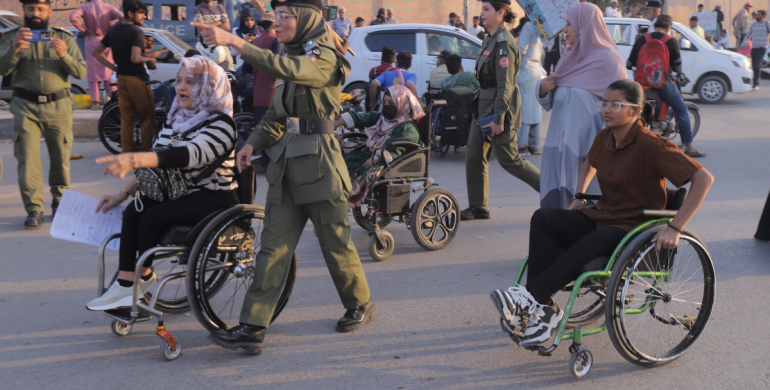
Community inclusion is not a concept reserved for policy documents or conferences. It is a lived reality shaped by access, attitudes, and everyday participation. For persons with disabilities (PWDs) in Pakistan, inclusion often remains limited due to social stigma, physical barriers, and lack of awareness. This is where the role of a leading NGO in Pakistan becomes essential, particularly through well-planned community inclusion projects that focus on visibility, participation, and equal opportunity.
Rather than working in isolation, these NGOs operate within communities, addressing barriers at their roots and encouraging shared responsibility for inclusion.
Why Community Inclusion Matters
Community inclusion ensures that persons with disabilities are not separated from social, cultural, educational, or economic life. It affirms that disability is part of human diversity, not a reason for exclusion.
In Pakistan, many PWDs experience:
- Social isolation within neighborhoods
- Limited access to public spaces
- Exclusion from community decision-making
- Reduced participation in education and employment
A leading NGO in Pakistan approaches inclusion as a collective effort. Instead of focusing only on individual rehabilitation, NGOs work to adjust environments, attitudes, and systems so communities become accessible to everyone.
Understanding Community Inclusion Projects
Community inclusion projects are structured initiatives designed to remove physical, social, and communication barriers that prevent disabled persons from participating fully in society. These projects operate at the grassroots level and involve local stakeholders directly.
Key goals include:
- Increasing visibility of persons with disabilities
- Promoting interaction between disabled and non-disabled community members
- Reducing stigma through education
- Improving access to shared spaces and services
When managed by a leading NGO in Pakistan, these projects are guided by disability rights principles and shaped by lived experiences.
Awareness and Outreach as a Foundation
Awareness is the first step toward inclusion. Many barriers exist not because of intent, but because of misunderstanding and lack of exposure.
NGO-led awareness initiatives often include:
- Community seminars and dialogues
- Disability awareness sessions in schools
- Engagement with local leaders and influencers
- Public campaigns addressing myths and stereotypes
Through consistent outreach, a leading NGO in Pakistan helps communities recognize disability as a social responsibility rather than a personal burden.
Outreach in Underserved and Rural Communities
In rural and underserved areas, exclusion is often intensified by poverty and limited access to services. NGOs extend community inclusion projects beyond urban centers to ensure broader reach.
Outreach efforts may involve:
- Mobile awareness teams
- Community meetings in local languages
- Collaboration with village councils
- Inclusion-focused local events
These efforts help ensure that inclusion is not limited by geography.
Volunteer Engagement and Community Ownership
Volunteers play a critical role in sustaining community inclusion work. NGOs rely on volunteers not only for manpower but also as inclusion advocates within their own social circles.
Volunteer engagement includes:
- Disability awareness training
- Participation in community events
- Support during outreach activities
- Peer engagement with PWDs
A leading NGO in Pakistan carefully prepares volunteers so their involvement is respectful, informed, and impact-driven. This approach encourages long-term commitment rather than one-time participation.
Youth and Student Involvement
Young people are often at the center of successful inclusion initiatives. NGOs partner with educational institutions to involve students in community projects.
Youth engagement leads to:
- Early understanding of inclusion values
- Reduced stigma among future leaders
- Long-term attitude change
- Expanded volunteer networks
Through structured involvement, community inclusion projects help shape more inclusive social norms over time.
Creating Inclusive Community Spaces
Physical accessibility remains a major barrier to inclusion. NGOs work with communities to improve access to shared spaces such as parks, schools, health centers, and community halls.
This may include:
- Accessibility assessments
- Community-led improvements
- Advocacy with local authorities
- Awareness about inclusive design
A leading NGO in Pakistan ensures that inclusion is practical and visible, not only theoretical.
Participation in Cultural and Social Life
True inclusion means participation in cultural, religious, and social activities. NGOs support disabled individuals to take part in events that strengthen community bonds.
Examples include:
- Inclusive sports and recreation activities
- Participation in cultural festivals
- Community discussion forums
- Skill-based group activities
These interactions help normalize disability within everyday community life.
Measuring Social Impact
Effective inclusion work requires accountability. NGOs track outcomes to understand what works and where improvement is needed.
Measurable indicators often include:
- Increased participation of PWDs in community activities
- Improved community attitudes toward disability
- Growth in volunteer involvement
- Better access to local services
A leading NGO in Pakistan uses this data to refine strategies and demonstrate tangible progress.
Long-Term Social Change Through Inclusion
Community inclusion is not a short-term effort. Its true value lies in lasting social change.
Over time, community inclusion projects contribute to:
- Reduced discrimination
- Stronger social cohesion
- Greater independence for PWDs
- Shared community responsibility
As inclusion becomes part of daily life, communities grow stronger, more respectful, and more resilient.
Challenges in Community Inclusion Work
Despite progress, challenges remain:
- Deep-rooted social attitudes
- Limited funding for outreach
- Resistance to change in some communities
- Infrastructure limitations
A leading NGO in Pakistan addresses these challenges through persistence, dialogue, and partnership, recognizing that inclusion is a continuous process.
Conclusion
Community inclusion is not achieved through statements alone; it is built through action, dialogue, and shared experience. By leading thoughtful community inclusion projects, a leading NGO in Pakistan helps ensure that persons with disabilities are recognized as active members of society, not passive recipients of care.
Through awareness, volunteer engagement, and measurable impact, these NGOs are shaping communities where participation is possible for all. Inclusion, when practiced at the community level, becomes a powerful force for dignity, equality, and lasting social progress.


